Colors & Sizes
Toy Poodle Guide: The “Einstein” of Lap Dogs (Smart, sassy, and Small)
By Marko · January 5, 2021 · Updated September 24, 2026

Is the Toy Poodle the right dog for you?
If you want a dog that fits in a tote bag but learns tricks faster than a Border Collie, the Toy Poodle is your match. They are the smallest of the three Poodle varieties, standing under 10 inches tall.
But don’t let the size fool you. This is not a fragile accessory. The Toy Poodle is a robust, intelligent watchdog with a “big dog” personality. This guide covers the honest reality of owning one in 2026.
What Will You Learn?
- Quick Facts: The Toy Poodle at a Glance
- 1. Temperament: A Watchdog in Miniature
- 2. Toy Poodle vs. “Teacup” Poodle: The Dangerous Truth
- 3. Health: The Fragility Factors You Must Know
- 1. Hypoglycemia (Low Blood Sugar) – The #1 Puppy Killer
- 2. Luxating Patellas (Slipping Kneecaps)
- 3. Dental Decay
- The CHIC Requirement
- 4. Buying Guide (2026 Prices)
- 5. Grooming: High Maintenance Beauty
- FAQ: Common Questions
Key Takeaways
- The toy poodle stands 10 inches or under at the shoulder.
- Toys are the same clever, athletic breed in the smallest recognised size.
- They are popular companions but need daily exercise and training.
- Toys face higher risks of low blood sugar, slipping kneecaps and dental disease.
- Gentle handling and regular vet care matter with a dog this small.
Quick Facts: The Toy Poodle at a Glance
| Feature | Specification |
|---|---|
| Lifespan | 14–18 Years (Very Long-lived) |
| Height | Under 10 inches (at the shoulder) |
| Weight | 4–6 lbs (Typical) |
| Shedding | Low / Non-Shedding (Hypoallergenic) |
| Energy Level | Moderate-High (Needs mental stimulation) |
| Avg. Puppy Price | $2,500 – $4,000 (Preservation Breeder) |
1. Temperament: A Watchdog in Miniature
Toy Poodles are fiercely loyal and alert. While they love to cuddle, they are not lazy. They were bred to be companions, but they retain the Poodle’s hunting intelligence.
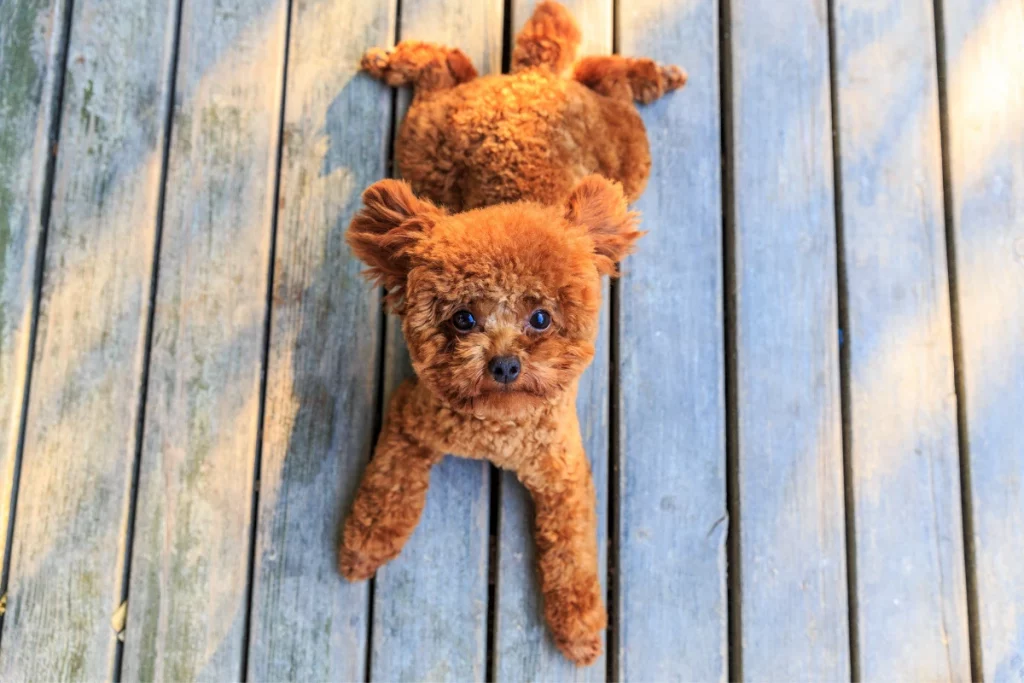
The “Velcro” Factor
Toy Poodles bond intensely with one person. They are prone to separation anxiety and will follow you everywhere.
- Watchdog Instincts: They will bark at the doorbell. You must train them early to stop on command, or they can become “yappy.”
- With Kids: Caution is needed. They are best for homes with older children (10+) or adults.
Editor’s Note: My Toy Poodle, pixel, thinks she is a Rottweiler. She will bark to alert me of a leaf blowing across the driveway. You are getting a serious dog, just in a small package.
2. Toy Poodle vs. “Teacup” Poodle: The Dangerous Truth
You will see breeders advertising “Teacup Poodles” for $5,000+.
Stop. “Teacup” is not a breed. It is a marketing term for the runts of the litter.
| Feature | Toy Poodle (Official Breed) | “Teacup” Poodle (Unethical Marketing) |
|---|---|---|
| Weight | 4–6 lbs (Healthy) | Under 4 lbs (Fragile) |
| Lifespan | 15+ Years | Often <5 Years (Due to organ failure) |
| Health | Sturdy for size. | High risk of hypoglycemia, heart defects, hydrocephalus. |
| Breeder | Focuses on health testing. | Focuses on “tiny” size over health. |
The toy poodle is the smallest recognised size, standing 10 inches or under at the shoulder. It is the same breed as the miniature and standard, so it is intelligent, athletic and trainable, and it still needs daily exercise and play. Small size brings specific risks: low blood sugar in puppies, slipping kneecaps and dental disease. Handle a toy gently and keep up with vet checks.
3. Health: The Fragility Factors You Must Know
Toy Poodles can live to be 18, but they have specific vulnerabilities. In 2026, you must be aware of these three risks.

1. Hypoglycemia (Low Blood Sugar) – The #1 Puppy Killer
Toy Poodle puppies have tiny livers and cannot store energy. If they miss a meal or get too cold, their blood sugar can crash, leading to seizures and death.
- Action: Always keep Nutri-Cal or Karo syrup on hand. If your puppy acts lethargic or wobbly, rub syrup on their gums immediately.
- Prevention: Feed puppies 4–6 small meals a day until they are 6 months old.
2. Luxating Patellas (Slipping Kneecaps)
Like Miniatures, Toy Poodles are prone to bad knees. The kneecap pops out of the groove, causing the dog to hop.
- Buyer Tip: Ask to see the parents’ OFA Patella certification.
- Safety Rule: Do not let Toy Poodles jump off high furniture (beds/couches). Use doggy stairs to protect their joints and prevent broken legs.
3. Dental Decay
Toy Poodles have 42 teeth crammed into a tiny mouth. This overcrowding leads to rapid plaque buildup and tooth loss.
- Reality: You must brush their teeth daily or use enzymatic sprays. Expect to pay for professional dental cleanings every 12–18 months.

The CHIC Requirement
Reputable breeders will provide a CHIC (Canine Health Information Center) number. This proves the parents were tested for:
- Patellas (Knees)
- Eyes (prcd-PRA DNA test) to prevent blindness.
4. Buying Guide (2026 Prices)
How much does a Toy Poodle cost?
In 2026, a well-bred Toy Poodle from health-tested parents typically costs between $2,500 and $4,000.
Why the high price?
Breeding Toys is difficult. Litters are small (often only 1–3 puppies), and C-sections are frequently required. You are paying for the breeder’s expertise and the medical care of the mother.
- Red Flag: Puppies under $1,500 are likely from puppy mills. These dogs often come with Giardia, Parvo, or genetic defects.
5. Grooming: High Maintenance Beauty
Toy Poodles have hair that never stops growing.
- Professional Grooming: Required every 4–6 weeks ($70–$100).
- Tearing: Toy Poodles are prone to tear staining (reddish streaks under the eyes).
- Fix: Keep the face hair trimmed short and wipe the eyes daily with a warm cloth. Use filtered water to reduce mineral staining.
FAQ: Common Questions
Are Toy Poodles yappy?
They can be if you let them. They are alert watchdogs. If you acknowledge their bark (“Thank you, I see it”) and then redirect them, they can learn to be quiet. If you yell at them, they will just bark more.
Can they live in apartments?
Yes! They are the ultimate apartment dog. They can get all their exercise indoors with a game of fetch, though they still need daily walks for mental health.
Are they hard to potty train?
They can be difficult because they have tiny bladders. You need to take them out frequently (every 2 hours for puppies). Many owners have success with indoor grass patches or pee pads for high-rise living.
Related guides
This article is part of our poodle sizes guide. To go deeper, see miniature vs toy poodle, the truth about teacup poodles and the miniature poodle.