Health & Wellness
Poodle Teeth Care: How to Keep Them Healthy & Clean
By Marko · September 30, 2021 · Updated September 24, 2026
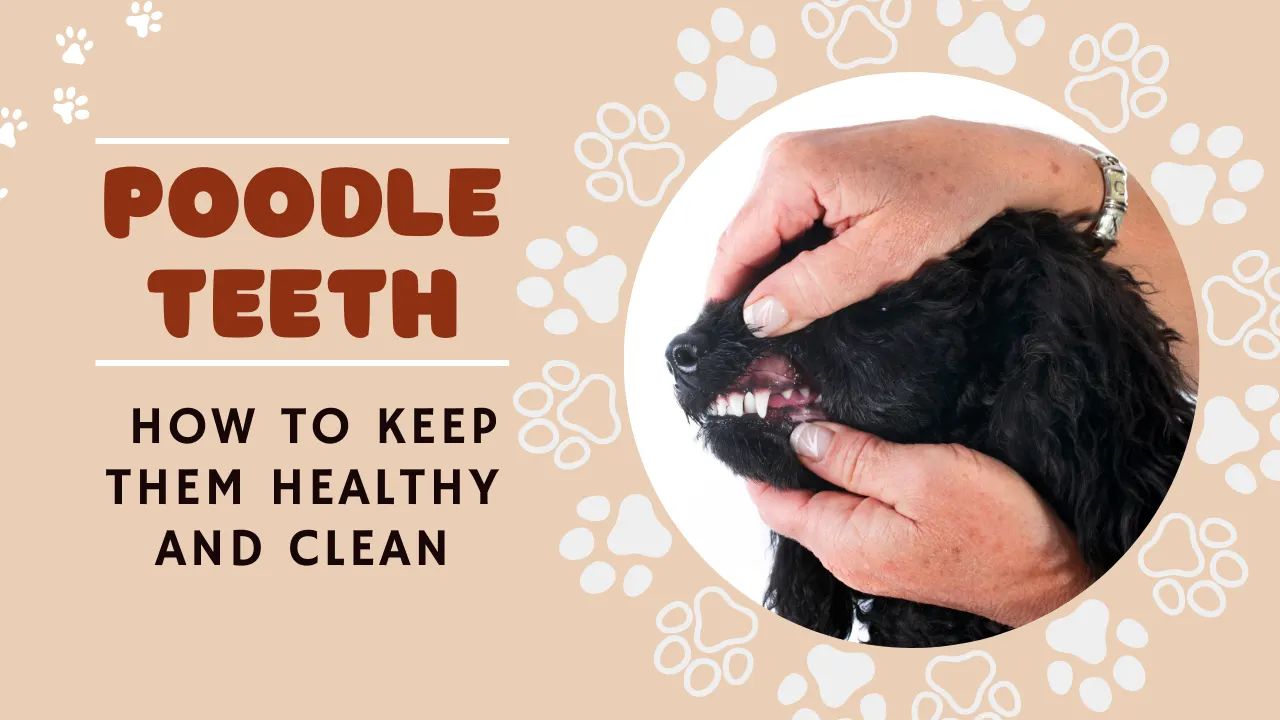
Gnashers, Fangs, Incisors, Canines, Molars, and Premolars. You’re probably familiar with your own hygiene and your mouth, but how knowledgeable are you about Poodles?
Whether you’re an expert or a novice, it’s something you should constantly stay on top of to make sure they stay healthy and live as long as possible. To help you, today, this article is going to cover all things related to Poodle’s teeth.
What Will You Learn?
- Structure of a Poodle’s Mouth
- Timeline of Poodles Teething
- Teething toys
- Do poodles have sharp teeth?
- Do poodles have bad teeth?
- How to brush a Poodle’s teeth
- In summary
Key Takeaways
- Periodontal disease affects about 80 percent of dogs by age three. Small breeds, including poodles, are at higher risk.
- Daily brushing is the single most effective home care. Most owners never do it, which is why problems build.
- Use a pet toothpaste. Human paste has fluoride and detergents that dogs should not swallow.
- Look for the VOHC seal on chews, diets and rinses. It means the product was tested for plaque or tartar control.
- Home care does not replace a professional clean under anaesthetic, which reaches below the gumline.
Structure of a Poodle’s Mouth
Just like humans, a Poodle’s mouth changes as a puppy and adult. They typically have two sets of teeth. They have milk teeth when they’re a puppy because they usually begin teething when they’re with their mother, around 2-3 weeks old.
A Poodle puppy’s mouth
Generally, a Poodle puppy has the following Milk Teeth:
- Incisors – 12 total (6 on the top and 6 on the bottom) grow in around 2-3 weeks of age.
- Canines – 4 total (2 upper and lower) which grow in approximately at 4 weeks.
- Premolars – 12 total (6 upper and lower) grow in about 3-6 weeks.
In total, a Poodle puppy’s mouth should have around 28 teeth that grow when they’re about 2 months old.
Important tips for a Poodle Puppy’s mouth
If you plan on owning a Poodle puppy or currently have one, you should make them feel as comfortable as possible while teething. Just because they can’t talk to us does not mean you should ignore their health issues.
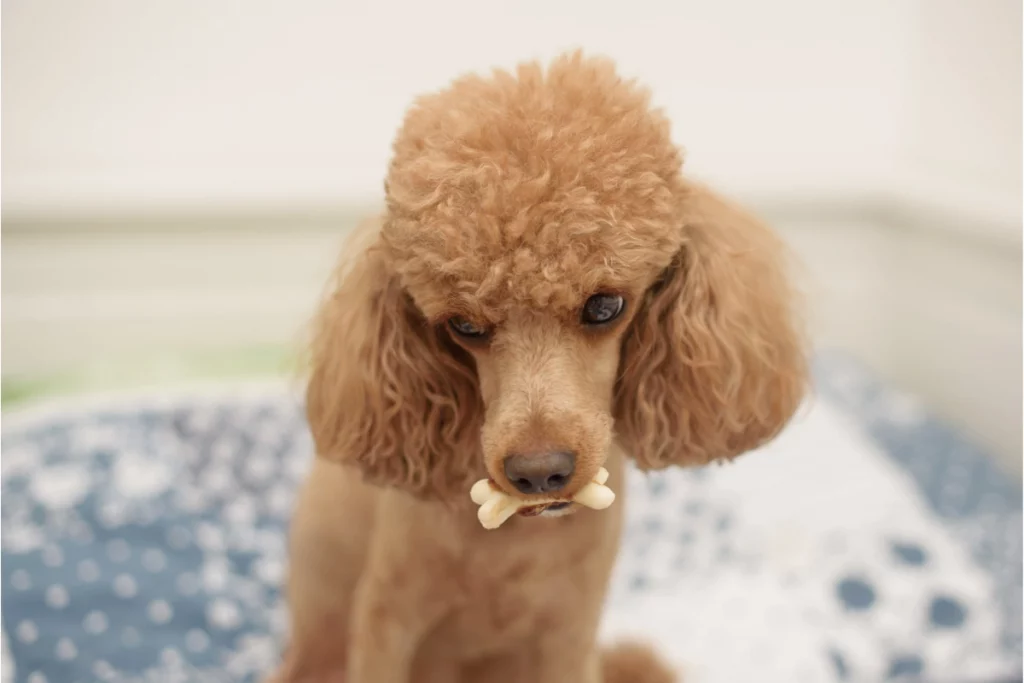
In fact, you can be empathetic and step in as their guardinan by helping ease the pain of their milk teeth growing in. You can do this by:
-
When they’re drinking water, you might want to add ice cubes as they can soothe their gums.
-
Try freezing a clean face towel or a cloth you use to wash your puppy. Then once frozen, give it to them, and this will allow them to chew it.
-
Let your puppy chew on ice cubes to ease the pain of the milk teeth growing in their mouth. You can make chewing ice cubes a lot more pleasant by freezing chicken stock into ice cubes and letting your dog chew on them.
-
Give them large chew toys so they can’t swallow them!
An Adult Poodle’s mouth
If you plan to own an adult Poodle, you can anticipate their adult set of teeth to grow from 12 weeks age. Pups usually stop teething at 6-7 months of age. During this stage, they start to lose their milk teeth, and their adult teeth grow in.
This is because the pressure from their adult teeth triggers their roots to dissolve, making them fall out. Don’t expect to see their teeth lingering around the house, though! It’s most likely a Poodle will swallow their milk/deciduous teeth.
Once fully grown, they will have around a set of 42 teeth in total inside their mouth. However, according to other breeds and certain types of Poodle, sometimes this number can vary.
Generally, an adult Poodle will have the following teeth:
- Incisors – 12 in total (6 on top and the bottom).
- Canines – 4 total (2 on top and 2 on the bottom).
- Premolars – 16 total (8 on top and the bottom).
- Molars – 10 total (4 on top and 6 on the bottom).
Timeline of Poodles Teething
Teething is common in all dogs but the time’s dog’s teeth can erupt will vary based on the growth and type of each breed. Typically for a Poodle they teeth from 3 to 7 months old. Here is a typical timeline:
- 3 Months: Their incisors start to grow.
- 5 Months: Canine teeth start to grow.
- 6 Months: Molars begin to grow.
- 7 Months: All puppy’s teeth will have grown into adult ones, and at this period, they should have stopped teething. If you own a Poodle and it hasn’t stopped teething by this point, don’t worry; some take longer than usual.
Teething toys
Teething is never a nice experience, and while dogs are smart, it’s highly unlikely they will be aware of the acute pain they experience in their mouth in their early days. To help provide them more comfort, there are toys made for pets specifically designed for teething!
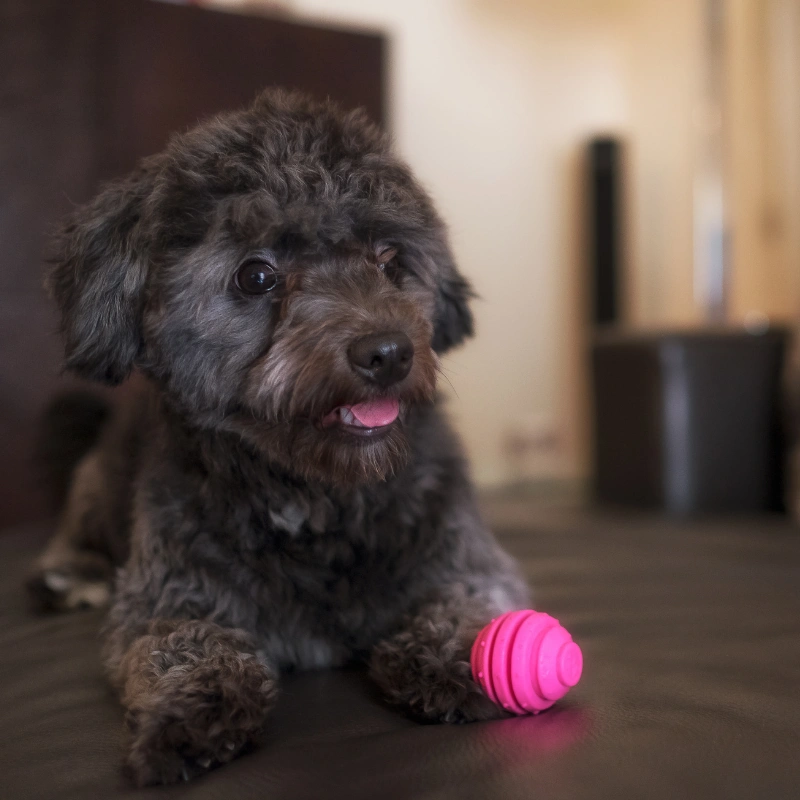
You don’t want to just buy any toy though, some are cheap, and they can cause a lot of damage to your Poodle. Some of the cheap ones Poodles also tend to get bored easily and are often a waste of money. The type of teething toy to look for, for your Poodle should have at least one of the following:
- It makes a noise or moves when they chew it.
- Encourages puppy to chew more, i.e., it releases a treat.
- Has different types of surfaces to place between their teeth and gums to soothe them
- It is the right size so it can fit in its mouth, but not too small to choke and not too big to prevent them from picking up.
Do poodles have sharp teeth?
Arguably, one of the most important factors many dog owners look for when bringing a new addition into their home is if a dog bites or not. Dog biting can be intimidating and cause many people to stay away from dogs due to perceived aggressive tendencies. Luckily, the Poodle is not an aggressive breed, and it’s highly unlikely they will bite as long as they are socialized from an early age.
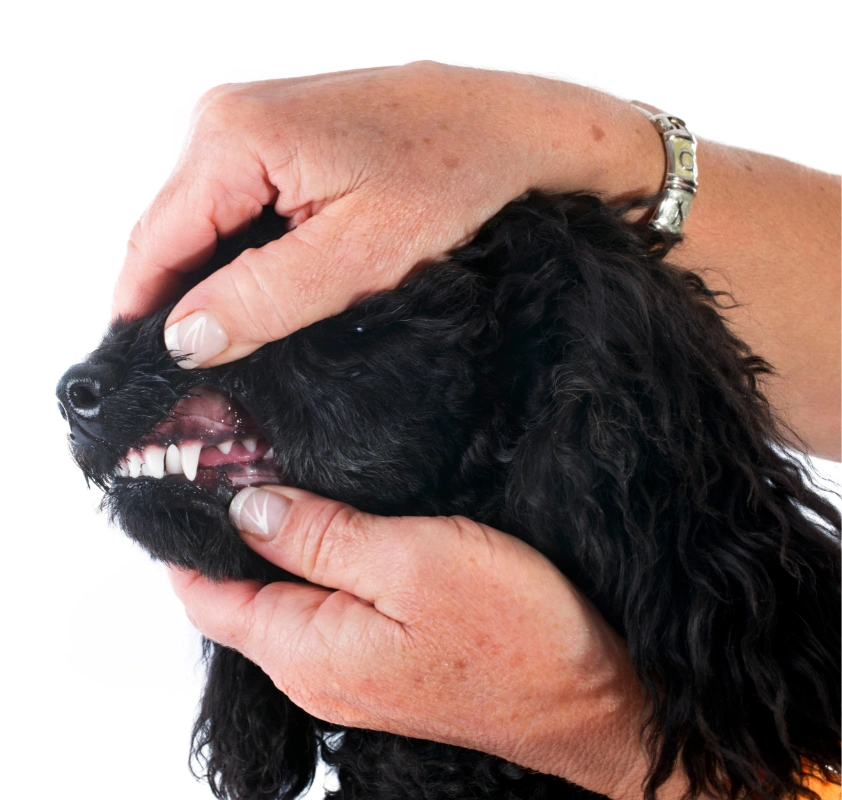
But just because they don’t have aggressive traits does not mean they won’t bite at all. It’s likely when they’re a puppy; they could bite due to chewing issues to relieve their pain.
Sometimes it can also be a common issue for Poodles to keep some of their milk teeth and have a full set of adult teeth and a few puppy ones. This is called persistent deciduous teeth.
Periodontal disease is the most common dental problem in dogs, and it affects about 80 percent of them by age three. Small breeds and older dogs carry the highest risk. The damage starts with plaque under the gumline, which you cannot see during a quick look at the teeth.
Do poodles have bad teeth?
Dental hygiene in dogs is something many pet owners tend to neglect and overlook. It’s something that should be taken seriously, though, as it’s one of the most common problems in dogs with dental disease affecting 80% of breeds. While this is common, the Poodle tends to be more at risk, especially the Toy Poodle.
Toy Poodles can easily accumulate a lot of tartar build-up on their teeth, spreading to their gums and root of their teeth, causing a serious infection. But generally, many vets state that all types of Poodles tend to have bad teeth compared to other breeds.
One disease, in particular, they’re at risk of is periodontal disease. This disease is caused by inflammation in their mouth or infection, which causes their bones and jaw structure to weaken. Periodontal disease is very painful for a Poodle and can spread to the internal organs damaging them if not treated. It can also contribute to bad breath and tooth loss. Don’t worry, though; this can be properly eliminated through proper brushing.
Daily brushing is the most effective thing you can do at home. A study in the Journal of Veterinary Dentistry found that only about two percent of owners brush daily. Even brushing a few times a week helps, and any brushing is better than none.
How to brush a Poodle’s teeth
There’s quite a technique involved when brushing your Poodles teeth, and ideally, you should be performing it 2-3 times a week. But you must follow these steps to stop your Poodle from getting stressed and adjusted to the experience. To brush their teeth properly, follow these steps:
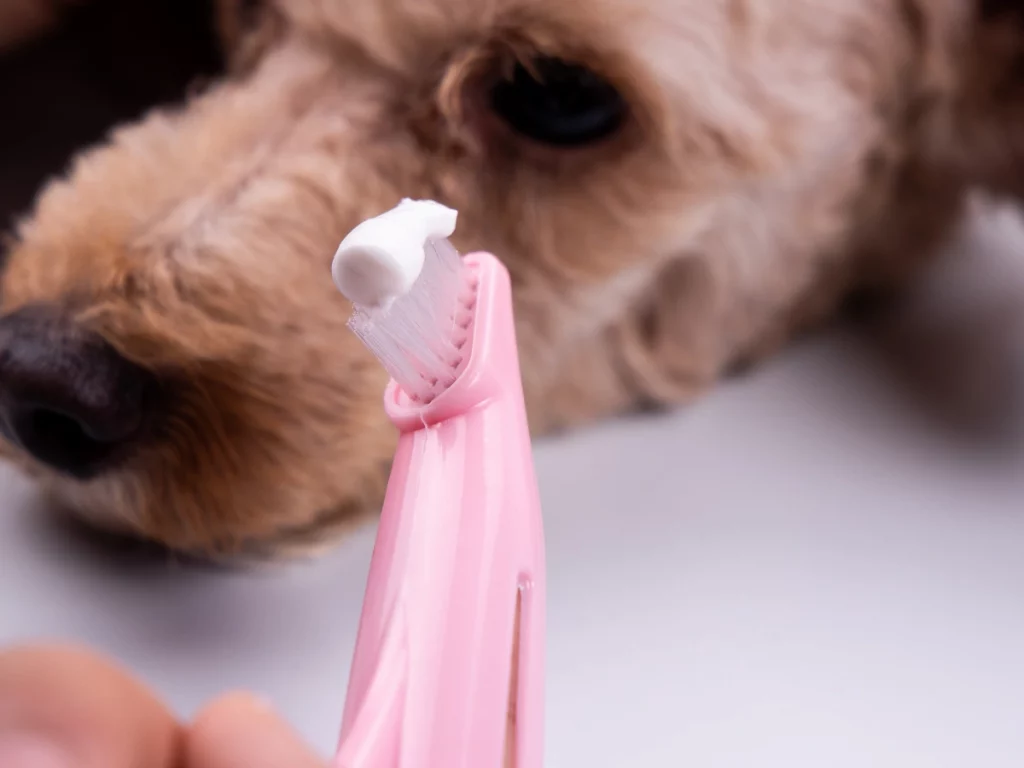
Buy dog toothpaste
Never buy human toothpaste for your Poodle! The reason for this is, human toothpaste contains a substance known as xylitol. Xylitol can be so severe it can cause organ failure and death in dogs.
Instead, you should aim to purchase toothpaste specifically made for dogs! Also, make sure the dog toothpaste you choose to buy comes in a nice flavor appealing to their palette, like peanut butter or chicken.
Begin with positive affirmations
Before you brush your Poodles teeth, you will want to get them associated with a positive stimulus before doing so.
For example, you could start stroking them, rubbing their belly, giving them a treat or toy right before you begin brushing.
Doing this over time will condition your dog and get them to behave in the anticipation that they will expect something good after the brushing has finished.
Begin brushing your Poodles teeth
When brushing a Poodles teeth, you will want to start at the back and then progress to the front. You can get a lot of dog toothbrushes that are conveniently angled so you can reach the back of their mouth properly. Remember to brush inside and outside each tooth.
Have water on standby
Once finished, it’s always a good idea to have water for them to drink and rinse their mouth out with. Remember also to provide your Poodle with positive affirmations for being good when having their teeth brushed.
Home brushing slows plaque, but it does not reach under the gumline. Most adult dogs need a professional clean under anaesthetic, and the AAHA dental guidelines recommend an oral exam and cleaning at least once a year for small breeds from around age one. Look for the VOHC seal on chews, diets and rinses, and always use pet toothpaste rather than human paste.
In summary
Poodles are a gentle breed but a breed that does not have gentle teeth. Sometimes a Poodle’s teeth can include both their milk teeth and adult ones.
When they’re young, they tend to be sharp and can accidentally cause harm. To stop you or others from being accidentally bitten, you must give them high-quality chew toys and ease their teething issues with ice cubes. It would help if you also brushed their teeth 2-3 times a week to reduce their risk of periodontal disease.
What’s your biggest concern when it comes to a Poodle’s teeth?
Frequently asked questions
How often should I brush my poodle's teeth?
Daily is best, because plaque reforms within a day. A few times a week still helps, and any regular brushing is better than none.
Can I use human toothpaste?
No. Human paste contains fluoride and detergents that your poodle swallows. Use a pet toothpaste, which is safe to swallow and often contains enzymes that help break down plaque.
Do dental chews replace brushing?
No. Chews and dental diets help, especially those with the VOHC seal, but they work best alongside brushing and regular veterinary care. They do not clean under the gumline.
How often does my poodle need a professional cleaning?
Most adult dogs need one a year, and small breeds often start around age one. Your vet will set the schedule after an oral exam.